
Yet another Digital ID consulation - deadline 5th May midday
I spoke up for life-saving copper landlines, for EHS people, for free choice and against the concept of digital inclusion, which is really coercion by another name.

Response sent to consultation@digitalid.cabinetoffice.gov.uk.
I am an independent researcher and wish to examine the assumptions underlying the stated core principles and questions posed in this consultation and to address section 4.2 specifically.
This consultation has already invalidated itself through the assumptions behind its questions. These are that digital ID is going to happen and that the UK population agrees with its rollout.
The consultation is therefore anti-democratic. Digital ID rollout was not in the Labour manifesto and therefore people have not voted in favour of this fundamental change to how society works. First, therefore, the fundamental question must be asked, “Do the British people want digital ID?” And if a person does not want digital ID and does not use it, will their life become significantly more difficult, due to the push to use digital ID universally? In other words, are citizens being given a real and workable alternative?
These fundamental questions require answers. Considering that 3 million people signed the petition “Do not Introduce ID Cards,” that 11,000 signed the petition “Provide a legal right to access certain services without a digital device” and that 17,000 people signed “Protect the Right to Live without a Digital ID,” it seems clear that millions of people do not want digital ID.
In addition, there is a large, ignored group of people who cannot use smart devices, even if they want to, therefore have no choice. I will address this when looking at section 4.2.
The Three Core Principles.
Briefly, the government states that Digital ID should be useful, secure and for everyone. The explanation of useful is, “It needs to be easier than the old telephone and paper-based system.”
The assumption here is that the old telephone is not useful. I suspect too that the word “easier” is really being used in the sense of “faster” or “more instant.” When an efficiently working digital system (a requirement being good equipment) is used by a fully competent person, it may well be easy and quick to use. But that does not mean it is more useful in most circumstances. On the contrary.
Let us look for a minute at the old telephone system. The old copper analogue landline is extremely simple to use as well as reliable and secure – you lift the phone and dial. You do not have to remember to charge it. If there is an electricity cut or broadband outage, it will work. You do not need a good mobile signal, but even a good mobile signal will fail if there is a large power cut, as mobile phone masts depend on electricity, on which there are increasing demands due to increased wireless infrastructure, renewable energy, electric vehicles and new data centres.
The reliability and ease of use of the copper landline is essential for many groups of people wishing to live independently: people with dementia, fatigue or confusion, people with mental health issues or loneliness, people with electromagnetic hypersensitivity or anyone with ill health or who needs to access emergency services urgently (battery back-up for VOIP is not enough).
Rolling out digital ID and relying on mobile communications, while discontinuing fixed copper analogue landlines, is not at all useful. It is downright dangerous to all the groups of people I have just mentioned.
“Secure and free”
Under this heading on the introductory page, the Government talks about a free tool, a government app to which you will have quick access. Here the government seems to be assuming that everyone has a smartphone. But if someone does not have a smartphone, will the government provide them with a free smartphone, if they choose to use digital ID? According to Ofcom 6% of the population (4.2 million) do not have a smartphone and 1.6 million people live offline. Will providing 4.2 million free smartphones with free use be feasible or even desirable? I personally would refuse a free smartphone.
Section 4.2 Digital inclusion
“The digital ID system will also be rolled out with a core focus on digital inclusion.”
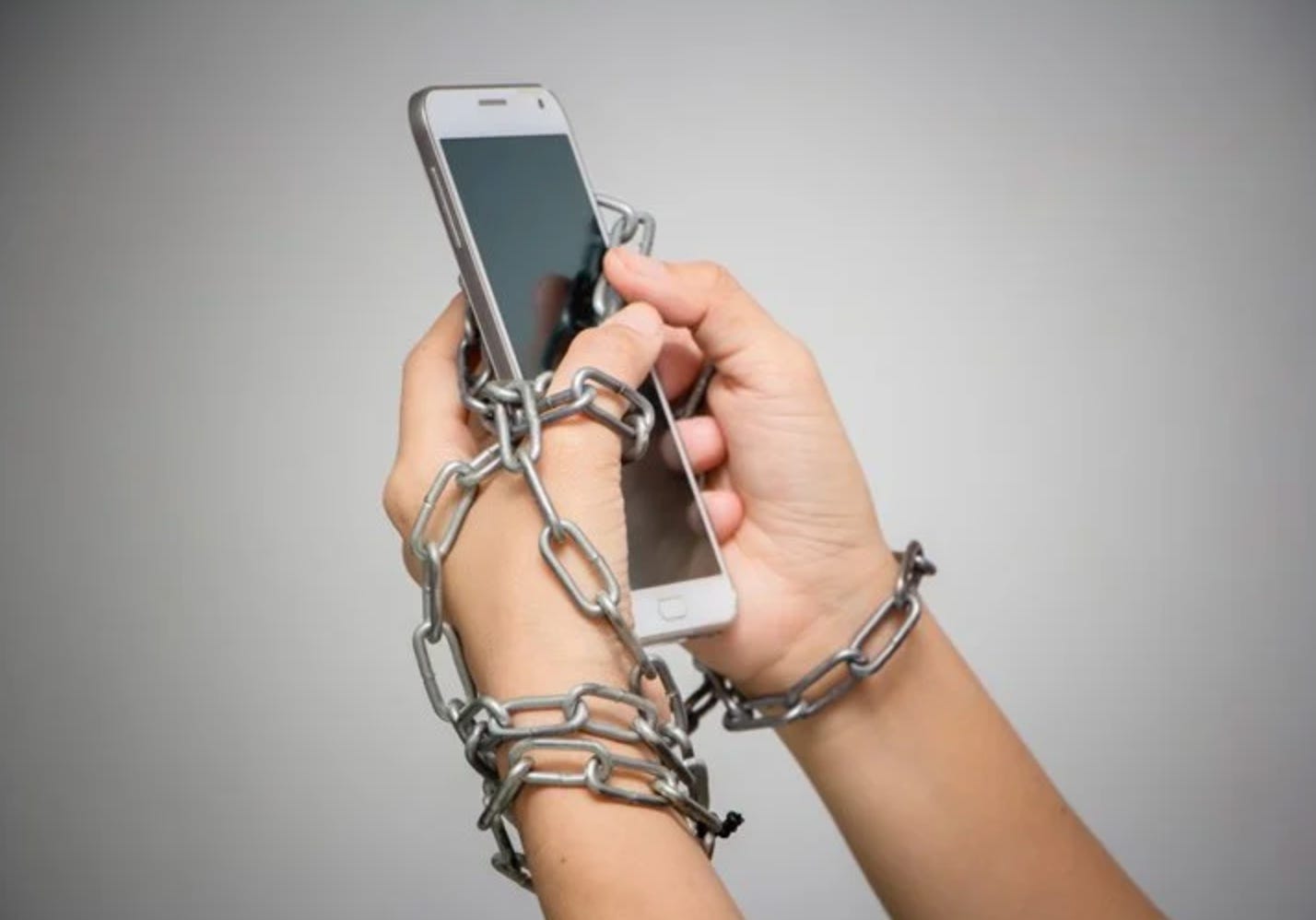
This statement is simply another way of the government saying that it intends to coerce people into using digital ID, whether they want it or not. Choice is not mentioned, only that digital ID will not be mandatory. But, in practice, this inclusion policy is the same as making it mandatory. There is already an expectation from business and services, that people will have a smartphone and indeed some services demand use of the QR code. This is discriminatory against those who don’t have one, don’t want one or can’t have one for medical reasons and is already leading to societal exclusion. The real issue is societal exclusion not digital exclusion. The former is undesirable, while the latter may be the preferred choice.
4.2.Q1. Some people may face barriers to creating or using the national digital ID. Are you aware of any other barriers not captured in the consultation?
Yes, there is an insurmountable medical barrier to the use of smart devices needed for digital ID. This is
1. that around 3.45 million people in the UK have electromagnetic hypersensitivity and
2. that many more are aware that safety exposure levels use in the UK are far too high to protect public health and so either don’t use smartphones or keep their use to a minimum.
Electromagnetic hypersensitivity (EHS)
People with EHS can neither use smart devices, nor go into high-EMF environments.
It is known that electromagnetic fields (EMFs) emitted by smartphones have immediate biological effects on human cells. The only question is, at what point do these effects become apparent or appear as disease? The answer is that people have widely different reactions. Some, with EHS, experience pain, dizziness, brain fog, palpitations, skin issues, insomnia and more soon after exposure. In others, prolonged periods of exposure to EMFs will cause oxidative stress leading to cancer, infertility, neurological disease and more in the medium to long term.
In 2019, European Commission’s EESC 2019 Report on Digitalization: Challenge for Europe estimated that 3 to 5% of the population (up to 3.45 million in the UK) suffers from EHS, some of those being so severely disabled, that they live in poverty and isolation due to their needing a very low-EMF environment. They cannot work or travel, may have to live rough and may have severe ill-health. Doctors rarely understand this condition, but there have been individual UK legal actions resulting in a local authority being mandated to provide low-EMF accommodation for a child, as well as an award of early ill-health retirement and compensation for a worker, due to disabling EHS.
The First Tier Tribunal ruling with regard to the child stated “We take into account that Public Health England doesn’t recognise EHS, but there is a credible body of evidence that on balance establishes the impairment.” It added that there “was ample global evidence and credibility of the existence of EHS” and “The description of life by the parents, and indeed by child XXX, shows that the effect on life is very substantial” and “We decided, on balance, that XXX’s symptoms are caused by electro-magnetic fields”
These findings were reinforced by an Upper Tribunal. This being the case it is outrageous that the government is ignoring the health effects of radio-frequency radiation or EMFs. It should ensure that those with EHS can lead as normal a life as possible without a smart device or having to visit a high-EMF environment. This should be a high priority, instead of which it is not mentioned at all.
Safety exposure levels
Another group of people, who are aware of the current scientific uncertainty as regards safety as well as of potential long-term health effects of EMFs, may not wish to use smart devices. They must not be pressurised into doing so, nor excluded from normal life, because they do not wish to use a smartphone.
A recent study found that safety exposure levels used in the UK and US are 200 times too high to protect public health. Scientists from the International Commission on the Biological Effects of Electromagnetic Fields (ICBE-EMF) said, “current RFR (radio-frequency radiation) exposure limits are at least 200 times too high to protect us from cancer risk with 8 hours per day of exposure. Also, based on other research, RFR limits were 24 times too high to protect against reproductive impacts.”
The ICBE-EMF also produced a study revealing the 14 flawed assumptions behind the safety exposure guidelines from ICNIRP which are followed in the UK and have barely changed since 1998.
Thus, people’s concerns about EMFs are based on serious independent scientific research that has built up over decades and are not baseless, but well-founded.
4.2.Q3. Chapter 4.2 of the consultation includes a non-exhaustive list of those people who may benefit the most from additional support measures to ensure they are able to access the national digital ID.
Are there any groups not included in the list that you believe could also be at risk of ID or digital exclusion?
This question assumes that digital inclusion is desirable. It is, in fact, digital exclusion which may be desirable. Considering that life has already become difficult for those who choose not to have smartphones, whether for medical or other reasons, full provision must be made for free choice. Government, businesses and services need to provide workable alternatives for those choosing not to have smart devices or digital ID.
If workable alternatives to digital ID and smart device use cannot be provided, the government should be held liable for negative health outcomes arising from the pressure to conform to a digital way of life as well as for deaths of people, whose landline would have saved their lives in times of emergency.
In conclusion, the groups at risk of societal exclusion, because they prefer or need digital exclusion, are those with EHS, those wishing to reduce EMF exposure, people with dementia, fatigue or confusion, people with mental health issues or loneliness, anyone with ill health or who needs to access emergency services reliably and anyone who does not want to use a smartphone, whatever the reason.
Finally, people who simply don’t want digital ID or to own a smartphone, should not be put at risk of societal exclusion. It is emerging, after all, that smartphones are a grave risk to the health of children, but it seems obvious to me that if adults are reliant on them for normal living, that children will, to their detriment, want to have them as soon as possible for themselves. Apart from less exposure to EMFs, decreased use of smartphones and digital media would lead to much healthier lifestyles, where people return to face-to-face connection, get outside more, take more exercise and enjoy nature and a greater range of activities, all leading to a greater sense of wellbeing.
Excellemt, Gillian
Thank-you